Know Your City Bylaws

Understanding local bylaws can help students be respectful neighbours, avoid fines and better understand their responsibilities as tenants. Below are several bylaws that commonly affect students living off campus. For more information, visit the City of London’s Information for Tenants page.


Noise Bylaw

The City of London’s Noise Bylaw helps reduce excessive noise that may disturb surrounding residents. While some noise is expected during the day, unreasonable noise is prohibited at any time, and additional restrictions apply overnight. Noise may be made between 9 a.m. and 11:00 p.m. at the latest.
 

Parking

Parking regulations vary throughout the city. Common restrictions include:

  • Parking between the curb and sidewalk or on the sidewalk
  • Parking on the boulevard (between the sidewalk and street)
  • Overnight street parking between 3:00 a.m. and 5:00 a.m. (unless otherwise permitted)
  • Parking on front lawns
  • Parking where signage prohibits it
     

Property Upkeep

Tenants and landlords share responsibility for maintaining the property. Lawns must be maintained, garbage removed and outdoor areas kept tidy. Students should review their lease to understand who is responsible for tasks such as lawn care and snow removal.
 

Garbage and Recycling

Students should follow the City of London’s collection schedule and disposal guidelines. The Recycle Coach app provides collection reminders and recycling information.
 

Liquor Offences

Under Ontario’s Liquor Licence and Control Act, alcohol may only be consumed in a private residence or licensed establishment. Drinking alcohol in public places is prohibited.



Know Your Neighbourhood

Once you’ve found a place and moved in, you’ll likely live there for the remainder of your university life. With that, you should get to know your area to make the most of your living experience. 


Public Transit

Full-time Western students receive a London Transit Commission (LTC) bus pass through their ancillary fees. Students can familiarize themselves with nearby routes and stops by visiting the LTC website.
 

Local Businesses

Many students choose to work close to where they live. Exploring local businesses can help students learn more about their neighbourhood and find employment opportunities. Western’s Career Services website also provides resources for job searches and on-campus employment.
 

Health Service Providers

Western students have access to Health & Wellness Services on campus. Students may also wish to identify nearby health services, including walk-in clinics, pharmacies and hospitals such as London Health Sciences Centre.
 

Local Activities

Students looking to explore London beyond Western’s events and activities can visit London Tourism to discover restaurants, parks, festivals and community events throughout the city.


Two Off-Campus Advisors talking on a public street

Tenant Rights

Understanding tenant rights and responsibilities can help students avoid common rental issues and make informed decisions. The information below highlights key protections under Ontario’s Residential Tenancies Act (RTA). Additional information is available through Tribunals Ontario.


Rent Increase Limits

For most rental units, annual rent increases are limited by the provincial rent increase guideline unless exempt under the Residential Tenancies Act.
 

Rent Receipts

Landlords are required to provide a receipt for any rent payment, rent deposit or other charge upon request. Students should keep receipts, as they may be needed for tax purposes or to resolve disputes.
 

Maintenance and Repairs

Landlords must keep rental properties in a good state of repair and comply with applicable health, safety, housing and maintenance standards under provincial and municipal laws.
 

Entry with 24 Hours Written Notice

A landlord can enter a rental unit between 8 a.m. and 8 p.m. only if they provide 24 hours’ written notice. Entry may be permitted for:

  • Making repairs or completing work in the unit
  • Conducting a reasonable inspection to determine whether repairs are needed
  • Allowing a potential mortgagee or insurer of the complex to view the unit
  • Allowing a potential purchaser to view the rental unit
  • Allowing an engineer, architect or similar professional to complete an inspection for a proposed conversion under the Condominium Act
  • Any reasonable purpose allowed by the rental agreement

Other Off-Campus Resources

Image
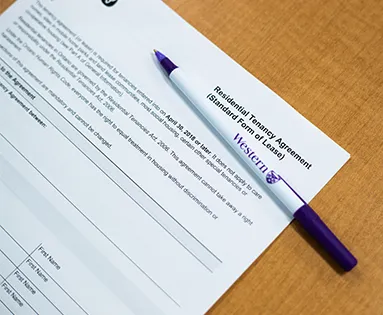
Pen on top of a rental agreement

Renting and Leasing

Helpful guidance on rental costs, key considerations and what students should ask before signing.

Image
Two students unloading a car

Moving In and Out

Practical resources to help students navigate the move-in and move-out process.

Image
View of two people sitting at a table with pens and paper

Tools and Templates

Downloadable resources to help students navigate off-campus living, including roommate agreements, sublet agreements and more.